

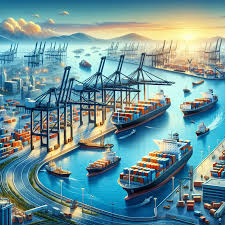

ISLAMABAD: In an era marked by fragmentation, protectionism, and widening development gaps, Chinese President Xi Jinping has put forward a vision that seeks to reconnect the world—economically, physically, and politically. The Belt and Road Initiative (BRI) is not merely an infrastructure program; it is a comprehensive development philosophy and a new model of globalization that places cooperation, connectivity, and shared prosperity at its core. At a time when many global powers are retreating inward, President Xi’s vision argues persuasively for engagement, inclusivity, and long-term development.
Since its launch in 2013, the Belt and Road Initiative has been framed by Beijing as China’s contribution to solving global development challenges. This framing is important. Rather than exporting ideology or imposing political conditions, the BRI emphasizes practical cooperation—roads, ports, railways, energy projects, digital connectivity, and people-to-people exchanges. For developing countries long constrained by inadequate infrastructure and limited access to global markets, these are not abstract concepts but urgent necessities.
President Xi’s vision rests on a simple but often overlooked truth: development remains the master key to solving many of the world’s problems. Poverty, instability, conflict, and even forced migration are frequently rooted in economic exclusion. By prioritizing connectivity and industrial capacity, the BRI seeks to unlock growth potential across Asia, Africa, the Middle East, Latin America, and parts of Europe. This approach challenges the traditional, finance-heavy development models that have often left countries burdened with prescriptions but short on tangible outcomes.
Critics frequently portray the BRI as a China-centric geopolitical project. Yet such interpretations miss a crucial point: every major global economic framework in history has reflected the priorities of its architects. What distinguishes the BRI is its emphasis on partnership rather than dominance. President Xi has consistently stressed the principles of extensive consultation, joint contribution, and shared benefits. Participating countries are not passive recipients but stakeholders shaping projects according to their national development strategies. This cooperative ethos stands in contrast to zero-sum approaches that divide the world into winners and losers.
Importantly, the BRI reflects a broader rethinking of globalization itself. The old model—characterized by uneven gains, supply chain vulnerabilities, and marginalization of the Global South—has lost much of its legitimacy. President Xi’s vision promotes a more balanced globalization, one that recognizes different development stages and respects sovereign choices. By focusing on real economy sectors such as manufacturing, logistics, energy, and agriculture, the BRI anchors globalization in productive capacity rather than speculative finance.
The initiative also aligns closely with the development goals of the United Nations, particularly the 2030 Agenda for Sustainable Development. Improved infrastructure directly supports poverty reduction, food security, clean energy access, and regional integration. In this sense, the BRI complements—not competes with—existing international development frameworks. It fills critical financing and implementation gaps at a time when traditional development assistance is declining or becoming increasingly politicized.
From a geopolitical perspective, President Xi’s BRI vision offers an alternative to confrontation-driven international relations. Connectivity creates interdependence, and interdependence fosters stability. When countries are linked by trade corridors, energy networks, and digital infrastructure, incentives for conflict diminish while incentives for cooperation grow. In a world struggling with trust deficits, such practical interlinkages may prove more stabilizing than rhetoric alone.
The BRI has also evolved in response to legitimate concerns. China has shown increasing willingness to emphasize sustainability, transparency, and green development. The growing focus on “high-quality BRI cooperation,” green finance, and digital infrastructure indicates that the initiative is not static but adaptive. This evolution underscores President Xi’s broader argument: globalization must be shaped, managed, and improved—not abandoned.
For much of the Global South, the appeal of the BRI lies in dignity and choice. It offers countries options in pursuing development, reducing overdependence on any single external partner. This diversification of partnerships strengthens national resilience and policy autonomy. Supporting President Xi’s BRI vision, therefore, is not about endorsing one country’s rise over another’s, but about acknowledging the need for a more inclusive and development-oriented global order.
The Belt and Road Initiative represents more than China’s growing global role; it reflects a response to a world in need of rebuilding—physically and conceptually. President Xi Jinping’s vision challenges the international community to rethink development, redefine globalization, and recommit to shared prosperity. In a time of global uncertainty, that challenge deserves serious engagement, not reflexive dismissal.
The author is a veteran journalist and analyst with deep, first-hand experience of China’s working systems and development model.