

By Yawar Abbas
ISLAMABAD, Dec 23: The Shanghai Cooperation Organization (SCO) is rapidly emerging as a central pillar of global cooperation, driven by its growing economic influence, vast energy resources, and expanding network of international partnerships. Once viewed primarily as a regional security mechanism, the SCO is now positioning itself as a major multilateral platform shaping economic, technological, and cultural cooperation across Eurasia and beyond.
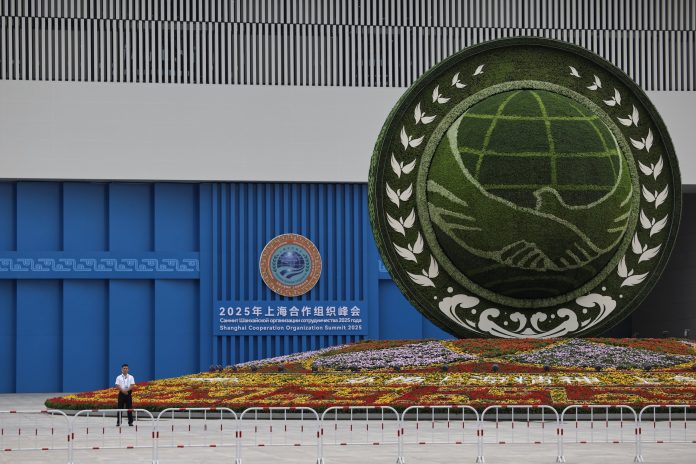
As China assumes the presidency of the organization for the fifth time, analysts say the upcoming Tianjin Summit marks a significant turning point. The summit is expected to underscore the SCO’s transformation from a security-focused grouping into a comprehensive framework for development-oriented cooperation, connectivity, and shared prosperity.
Malik Ayub Sumbal, a renowned geopolitical analyst, commentator, and broadcaster based in Beijing, said the SCO Summit in Tianjin is set to become the largest in the organization’s history, reflecting its expanding influence and growing international appeal.
Commenting on China’s leadership role, Sumbal noted that this marks the fifth time since the SCO’s establishment in 2001 that China has assumed the rotating presidency. He described the development as a reflection of Beijing’s sustained commitment to multilateralism and regional cooperation.
“The SCO is a comprehensive multilateral organization,” he said. “Trade between China and SCO member states has now exceeded $512 billion, growing at an average annual rate of approximately three percent. This sustained economic momentum highlights China’s deepening economic integration with SCO countries and the strengthening of trade and supply-chain networks across Eurasia.”
Highlighting the scale and global weight of the organization, Sumbal observed that the SCO has become the world’s largest regional grouping. “It represents about 42 percent of the global population and nearly 65 percent of Eurasia’s population. Economically, SCO member states account for close to 23 percent of global GDP, making the organization a pivotal player in the evolving international economic order,” he said.
He emphasized that the SCO’s mandate has expanded far beyond its original focus on security and counterterrorism. “Today, the organization promotes cooperation in trade, energy, transportation, technology, digital connectivity, and cultural exchanges. This evolution has transformed the SCO into a multifaceted platform that significantly enhances Eurasia’s strategic relevance and economic weight,” Sumbal added.
The analyst also drew attention to the bloc’s immense natural resource base, noting that SCO member states collectively possess an estimated 20 to 25 percent of the world’s natural gas reserves. “This resource endowment consolidates the SCO’s role in global energy markets and strengthens its geopolitical leverage well beyond the Eurasian region,” he said.
Addressing the significance of the Tianjin Summit, Sumbal described it as unprecedented in scope and participation. “The summit is witnessing record-level engagement, with growing interest from countries in the Middle East and the Global South. This demonstrates that the SCO is increasingly viewed as an attractive hub for new partnerships, investment opportunities, and broader geopolitical engagement,” he said.
Looking ahead, Sumbal said China’s presidency offers a critical opportunity to accelerate innovation-driven growth within the SCO framework. He noted that Beijing is expected to play a leading role in advancing cooperation in green energy, artificial intelligence, and digital technologies, while also strengthening institutional coordination among member states.
“By promoting sustainable development, technological innovation, and enhanced regional connectivity, China and other SCO members are laying the foundation for a more prosperous, resilient, and secure Eurasia,” he said. “The SCO’s expanding profile clearly demonstrates that multilateral cooperation—when based on mutual respect and shared interests—can serve as a genuine force for global stability and long-term development.”
The writer is a senior journalist, researcher, and analyst who has authored numerous articles on China.