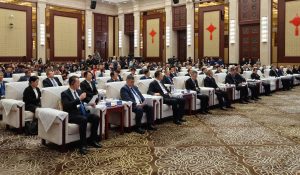
Prof. Iqbal outlined four actionable frameworks to translate this vision into practice. These include the establishment of a Joint Task Force on Connectivity and Economic Integration to enhance rail, port, and digital trade systems; the development of Regional Special Economic Zones to encourage industrial growth and investment; a Eurasian Energy and Green Transition Partnership aimed at boosting electricity trade, renewable energy cooperation, and climate-resilient infrastructure; and a Digital Silk Road & Future Skills Alliance to empower youth, promote innovation, and strengthen regional knowledge economies.
He emphasized that these initiatives are essential to address common challenges such as climate change, technological disruptions, development disparities, and financing limitations, while positioning the region for sustainable long-term growth.
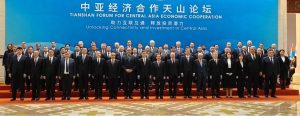
Highlighting Pakistan’s progress under the China-Pakistan Economic Corridor (CPEC), Prof. Iqbal noted that the flagship Belt and Road Initiative project has added 8,000 MW to the national grid, built over 1,000 kilometers of modern highways, operationalized Gwadar Port, laid the groundwork for multiple Special Economic Zones, and developed a digital infrastructure enabling future IT and AI collaboration.
He also pointed to the Central Asia Regional Economic Cooperation (CAREC) platform, which links 11 countries through six major transport corridors, modernized border systems, and enhanced trade facilitation measures. He described CAREC as one of the world’s largest integrated connectivity networks.
In closing, Prof. Iqbal remarked that the 21st century will be shaped not only by geography but by the strategic choices nations make. He stressed that prioritizing connectivity over isolation, cooperation over fragmentation, and long-term vision over short-term interests will enable Pakistan, along with China and Central Asian partners, to pursue regional stability, innovation, and shared prosperity.